

8 min read
Building high performance teams in arts, culture, and events is often talked about as a leadership problem, but in my experience it’s more often a clarity problem.
Our 2026 report, Powered by Purpose, proved that talented people in arts, culture, and events roles are busy, committed, and stretched, yet sometimes still feel frustrated, disconnected, or unsure where to focus their energy. The quotes used throughout this blog come from contributors to the report.

Through my work at Spektrix and as a trustee at Leeds Playhouse, I’ve learned that performance rarely improves through tighter control or better plans alone. It improves when senior leaders are clear about purpose, honest about priorities, and willing to share ownership of decisions. This article shares what I’ve learned along the way, in a set of practical reflections that you can adapt to your own organisation.
Aligned autonomy: solving shared problems as a united team
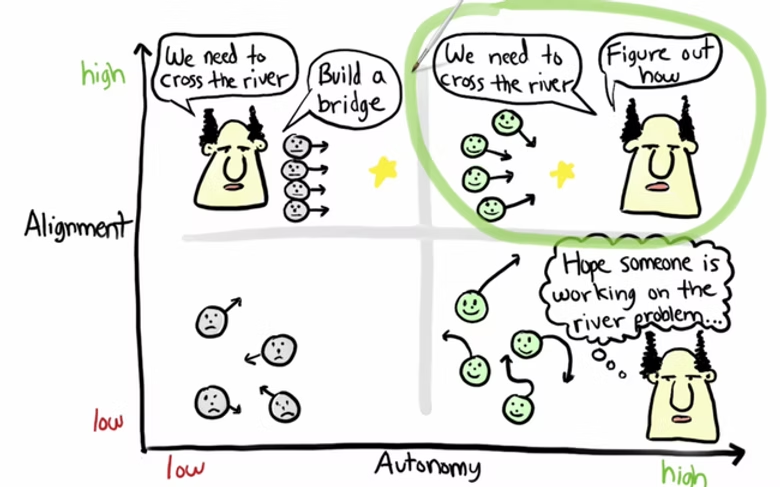
Back in 2014, organisational consultant Henrik Kniberg sketched this illustration of teams and management at Spotify. It’s a visual representation of aligned autonomy - a leadership principle designed to help build high performing teams through clear goals, clear expectations, and permission for team members to bring their best ideas to the table.
We’ve been working to embed this leader:leader culture at Spektrix over several years, in the firm belief that it will improve team wellbeing and increase our overall impact, helping us provide the best possible service to our users and community. When we surveyed 268 arts and events sector workers in late 2025, it was fascinating to see how many of them saw the same key elements - mission clarity, team empowerment - as vital to building more meaningful, impactful workplaces.
“Listen to audiences and staff (in particular junior staff). Have a strong mission, values, aims and opportunities. Develop and stick to a strong brand and programming. Trust staff and stop micro-managing.”
Marketing manager, 35-44, UK independent venue
Powered by Purpose
But if everyone’s a leader, what’s the role of senior leaders?
I find the idea of ‘intent based leadership’ useful to explain how team members can take the lead in their own areas of responsibility.
-
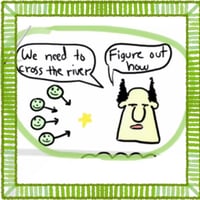
For senior leaders, leadership means setting high level outcomes and providing context and guidance to empower the wider team: “We need to cross the river.”
-
For team members, leadership means understanding the problem and bringing their own expertise to address it. Team members should take the lead by consulting with colleagues and welcoming ideas, before proposing the best approach: “I intend to build a bridge, and this is how I intend to do it.”
Often, team members’ input will help to define high level outcomes - they’re the people with the perspective on the ground, and the first to notice how the lack of a crossing limits communities, visitors, or trade. They should have clear routes to raise those concerns with senior leaders, who’ll factor them into high level priorities.
“We don’t expect employees to get approval from their boss before they make decisions. But we do know that good decisions require a solid grasp of the context, feedback from people with different perspectives, and awareness of all the options.”
Reed Hastings & Erin Meyer, ‘No Rules Rules: Netflix and the culture of reinvention’
The role of your mission in team performance
In reviewing priorities and setting direction, your mission has a critical part to play. A company’s mission and vision shouldn’t be a statement in a file, but a living, breathing guide to inform daily decisions.
At Spektrix, we believe that engagement with artistic, cultural and entertainment experiences is essential to individuals and communities. These experiences inspire, uplift, entertain, financially support and so much more. They are also uniquely placed to break down social division, allowing us to transcend our differences and feel a common humanity.
That belief underpins our mission and vision, which sit at the heart of every decision:
|
We envision a strong, vibrant, and connected industry offering every individual and every community the ability to engage with a full range of artistic, cultural and entertainment experiences. |
Our mission is to work in partnership with organisations presenting artistic, cultural and entertainment experiences to develop more and deeper relationships with their audiences and to support their organisational health. |
From feature development to staffing levels, we ensure that everything we do comes back to this central purpose. For example, we recently evolved our approach to client support. Previously, 100+ team members all shared responsibility for 800+ clients. That had worked when we were a smaller company, but we risked losing some of the human connection and context that our users valued. Now, there’s an individual or small team who’s accountable for monitoring and supporting the success of every organisation we work with. This means we can offer proactive, contextual support, based on a real understanding of each organisation’s unique priorities and individual people - and our team members can take the lead in driving those clients’ success.
As it becomes established, this leader:leader approach creates a shared rhythm at every level of an organisation. Teams surface the real blockers they’re experiencing and propose ways forward, drawing on their day-to-day knowledge of what works. Senior leaders weigh those proposals against mission and priorities, then set clear direction. With that alignment in place, team members become leaders: they can move quickly and confidently, knowing their decisions are focused on the right problems. In those conditions, employee wellbeing, culture, and retention can quickly improve.
What makes a high performing team?
Low alignment, low autonomy

“Our artistic product sometimes takes a back seat to our educational program and a lot of that is due to the head of the education program not willing to compromise or work with others. So I would work to make sure that all of our departments can be balanced and collaborative.”
Ticketing manager, 35-44, US independent venue
Powered by Purpose
This setup is the worst of all worlds. Teams receive instruction, but it’s inconsistent and incoherent. That can quickly lead to internal conflict which limits impact and reduces team wellbeing.
If every team member or department is pulling in a different direction - no matter how good their intentions - they may make small individual gains but little real change.
High alignment, low autonomy
I’d prioritise: “Clear processes which provide clarity to all teams and promote the conditions for positive audience experiences”
Ticketing manager, 25-34, US municipal arts center
Powered by Purpose
Things are getting better! There’s a clear goal, and a team working on it. But rather than decisions being made on the ground, by the people closest to the problem, they’re driven by instructions from above.
The senior leader is acknowledging the problem - “We need to cross the river.” He’s also defining the solution - “Build a bridge.” The build’s underway - but there’s no opportunity for leaders within the team to bring their ideas or understanding to the table, or to move things forward without leadership intervention.
Low alignment, high autonomy
I’d prioritise: “Interdepartmental communication - we tend to act a little too independently, we could be an even more powerful force in the community if our messaging was more consistent.”
Data analytics manager, 55-64, Canadian independent festival
Powered by Purpose
The goal has been identified. But each team member has seen something else that feels important, and their attention’s divided.
Rather than providing a clear direction, the senior leader has left them to set their own priorities without full context. They’re all busy, but the crucial problem remains unsolved.
Low alignment, low autonomy
I’d prioritise: “Letting each department handle what needs to be done. Embrace ideas and improvements offer by staff. Make sure to communicate so everyone is on the same page. Change things up!”
Ticketing manager, 45-54, US independent musical theater
Powered by Purpose
The vision of aligned autonomy. The big picture outcome has been clearly defined. Team members know it’s their top priority.
They’re ready to explore solutions, loop back to stakeholders with a plan to deliver on it, incorporate additional input, and then collectively make it happen.
In practice: Setting priorities at Leeds Playhouse
I’m a trustee at Leeds Playhouse, where I chair the People and Culture sub-committee, and where we talk regularly about how to make sure team members feel connected to the purpose and understand the part they play in delivering on it.
I’ve learned that conversations like this don’t always come naturally. When people hear “leader:leader culture”, it’s easy to assume it means making decisions by committee, or removing senior leadership altogether. In practice, I’ve found the opposite is true.
Senior leaders still have a vital role: to deliberately shape and articulate a clear vision that reflects the organisation’s culture and purpose. That vision is strengthened by listening to others, but it’s the responsibility of senior teams to bring those perspectives together and set direction. When they get it right, team members will in turn be able to take up their role as leaders - seeing themselves reflected in the vision and feeling they’re part of the solution.
Practical steps to building high-performing teams
Building your vision and priorities should feel like a positive, collaborative process. It’s a chance to step back, take an overview, and remind yourself why your work matters.
If you’re ready to start building a high performing team, this is where I’d suggest you begin:
|
Align on your culture and priorities. Invite ideas from across your team, then step back as a senior leadership group to curate and refine those perspectives into a single, shared purpose.
|
|
⇓ |
|
Define what success looks like. Identify a small number of measures that show progress toward your vision. Keep them time-bound, no longer than 12 months, and limit them to three to five priorities so focus stays clear. |
|
⇓ |
|
Be clear about what success looks like, how you’ll track it, and who owns the data. Share progress openly across the organisation, including where things haven’t gone to plan. That transparency often creates the urgency teams need to take the lead. |
|
⇓ |
|
When something goes well - or badly - pause before acting. Take time to understand the problem, weigh options, and prioritise what will have the greatest impact, rather than reacting to whatever feels most urgent. |
|
⇓ |
|
With clear priorities in place, invite teams to bring ideas, explore solutions, and work across functions. That might mean loosening traditional boundaries, as long as effort stays focused on the right outcomes and progress is reviewed regularly. |
|
⇓ |
|
Alongside shared goals, be explicit about who leads what. Give junior team members permission to take ownership, and remind senior colleagues that their role is to guide, challenge, and connect, not to make every decision. |
|
⇓ |
|
Build trust. When priorities, accountability, and progress are clear, trust follows. Teams function as groups of aligned leaders, in which everyone understands how their work connects to shared goals and how to bring ideas forward with confidence. |
The lasting impact of high performing teams
A high performing team isn’t an end in itself. It’s a measure of progress toward your central purpose.
For many arts and event organisations, that purpose lies in the meeting point between art, culture, and community. 91.1% of survey respondents agreed that their work was made meaningful because of its positive influence on audiences and communities. On the other hand, just under half - 45.5% - felt that their pay and benefits were fair and proportionate.
The commitment and creativity is there in your workforce. If you can build a culture in which everyone is empowered to drive their own decisions, and willing to take the lead, the results have the potential to be transformative.
In the short term, those changes could create the working conditions your team members are asking for, potentially keeping the best people in the sector. In the long term, your high performing team has potential to drive even more powerful outcomes - growing revenue, connecting with audiences, and delivering even greater impact in their communities.
You may not have control over the funding you receive, but you do have control over your team and the culture you build across your organisation.

 Michael Nabarro (he/him) is CEO & co-founder of Spektrix.